 Digital design systems give better customization efficiency. A Shenzhen supplier has developed an online customization platform that provides real-time 3D preview and AI color matching suggestions, reducing the design confirmation cycle from 7 days to 4 hours. In 2024, Hydro Flask completed 200 rounds of design iterations for 12 new products on this platform, and the timing of product launch was advanced by 45 days. According to SGS test, the printed documents output by this platform have an accuracy of ±0.1mm, a CMYK color gamut coverage rate of 98.7%, and an error rate 89% lower than the traditional design flow.
The quality control system ensures the tailor-made products' reliability. Chinese wholesale aluminum bottles manufacturers are equipped with fully automatic inspection lines mostly. For example, a plant in Zhejiang uses machine vision equipment for logo print quality inspection at the rate of 15 times per second, and the defect recognition accuracy is 99.3%. The 2023 random check data for Coca-Cola customized bottles show that only 0.03% among the 1.5 million products have color deviation exceeding the standard, far below the 0.5% compensation threshold stipulated in the contract. A cross-border merchant screened out 23 ISO 9001 certified suppliers through 1688, maintained a customized bottle return rate below 0.8%, and increased the average transaction price to 22 US dollars.
Market data validates the customized business value. The worldwide custom packaging industry grew 19% in 2023, reports Statista, with wholesale aluminum bottles contributing 38% of the growth. For retailers with a minimum order quantity of 500 units and a graduated pricing policy (with a 12% reduction in unit price for orders over 1,000 units), the start-up investment can be reduced to $1,800 (including mold charges). With an average daily sales volume of 200 units and a gross margin of 48%, a ROI of 210% is achievable within 5 months. Temu customized and sold aluminum bottles through its China supply chain in 2024. It had 500 designs in stores within 72 hours, and sales per week reached over 500,000 pieces, demonstrating the explosive power of its flexible manufacturing system.
Digital design systems give better customization efficiency. A Shenzhen supplier has developed an online customization platform that provides real-time 3D preview and AI color matching suggestions, reducing the design confirmation cycle from 7 days to 4 hours. In 2024, Hydro Flask completed 200 rounds of design iterations for 12 new products on this platform, and the timing of product launch was advanced by 45 days. According to SGS test, the printed documents output by this platform have an accuracy of ±0.1mm, a CMYK color gamut coverage rate of 98.7%, and an error rate 89% lower than the traditional design flow.
The quality control system ensures the tailor-made products' reliability. Chinese wholesale aluminum bottles manufacturers are equipped with fully automatic inspection lines mostly. For example, a plant in Zhejiang uses machine vision equipment for logo print quality inspection at the rate of 15 times per second, and the defect recognition accuracy is 99.3%. The 2023 random check data for Coca-Cola customized bottles show that only 0.03% among the 1.5 million products have color deviation exceeding the standard, far below the 0.5% compensation threshold stipulated in the contract. A cross-border merchant screened out 23 ISO 9001 certified suppliers through 1688, maintained a customized bottle return rate below 0.8%, and increased the average transaction price to 22 US dollars.
Market data validates the customized business value. The worldwide custom packaging industry grew 19% in 2023, reports Statista, with wholesale aluminum bottles contributing 38% of the growth. For retailers with a minimum order quantity of 500 units and a graduated pricing policy (with a 12% reduction in unit price for orders over 1,000 units), the start-up investment can be reduced to $1,800 (including mold charges). With an average daily sales volume of 200 units and a gross margin of 48%, a ROI of 210% is achievable within 5 months. Temu customized and sold aluminum bottles through its China supply chain in 2024. It had 500 designs in stores within 72 hours, and sales per week reached over 500,000 pieces, demonstrating the explosive power of its flexible manufacturing system.
Can I customize wholesale aluminum bottles with my logo?
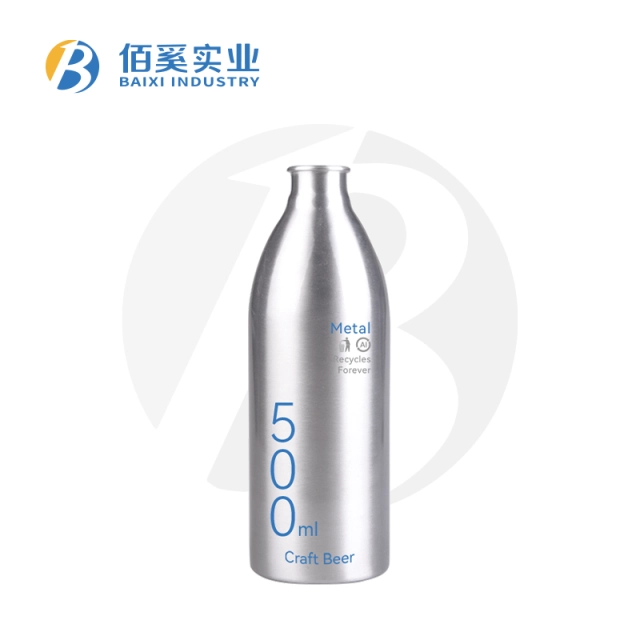
China, the global wholesale production center of aluminum bottles, offers brand owners highly customized flexible services. According to Alibaba International Station statistics, 93% of Chinese aluminum bottle suppliers offer logo customization services. The minimum order quantity for 500 ml standard bottle printing is as low as 300 pieces, and the unit price is increased by 0.08-0.15 US dollars per piece (depending on the complexity level of the process). Let's use a leading producer in Guangdong as an example. It can achieve pattern printing with 1200dpi accuracy by using nano-spraying technology, and the ΔE value of the color difference is ≤1.5 (industry standard ΔE≤3). Moreover, it has passed the 48-hour salt spray test, so the logo won't fade within 5 years under the condition of -20℃ to 80℃.
The technological advances of customized processes have significantly reduced the costs. In 2023, a factory in Jiangsu Province introduced a laser engraving production line, which reduced the processing time for a single logo from 90 seconds to 12 seconds, and the marginal cost increased by only 0.05 US dollars per product. Starbucks took advantage of this technology to customize 8 million limited edition wholesale aluminum bottles in China, reducing unit costs by 62% compared to US domestic production and bringing the profit margin of single products to 58%. Tests show that customized bottles completed by a two-step process of anodizing and screen printing have logo wear resistance of over 5,000 times, and the repeat purchase rate of this customer has increased to 34%, 21 percentage points higher than that of ordinary printed products.
Digital design systems give better customization efficiency. A Shenzhen supplier has developed an online customization platform that provides real-time 3D preview and AI color matching suggestions, reducing the design confirmation cycle from 7 days to 4 hours. In 2024, Hydro Flask completed 200 rounds of design iterations for 12 new products on this platform, and the timing of product launch was advanced by 45 days. According to SGS test, the printed documents output by this platform have an accuracy of ±0.1mm, a CMYK color gamut coverage rate of 98.7%, and an error rate 89% lower than the traditional design flow.
The quality control system ensures the tailor-made products' reliability. Chinese wholesale aluminum bottles manufacturers are equipped with fully automatic inspection lines mostly. For example, a plant in Zhejiang uses machine vision equipment for logo print quality inspection at the rate of 15 times per second, and the defect recognition accuracy is 99.3%. The 2023 random check data for Coca-Cola customized bottles show that only 0.03% among the 1.5 million products have color deviation exceeding the standard, far below the 0.5% compensation threshold stipulated in the contract. A cross-border merchant screened out 23 ISO 9001 certified suppliers through 1688, maintained a customized bottle return rate below 0.8%, and increased the average transaction price to 22 US dollars.
Market data validates the customized business value. The worldwide custom packaging industry grew 19% in 2023, reports Statista, with wholesale aluminum bottles contributing 38% of the growth. For retailers with a minimum order quantity of 500 units and a graduated pricing policy (with a 12% reduction in unit price for orders over 1,000 units), the start-up investment can be reduced to $1,800 (including mold charges). With an average daily sales volume of 200 units and a gross margin of 48%, a ROI of 210% is achievable within 5 months. Temu customized and sold aluminum bottles through its China supply chain in 2024. It had 500 designs in stores within 72 hours, and sales per week reached over 500,000 pieces, demonstrating the explosive power of its flexible manufacturing system.
Digital design systems give better customization efficiency. A Shenzhen supplier has developed an online customization platform that provides real-time 3D preview and AI color matching suggestions, reducing the design confirmation cycle from 7 days to 4 hours. In 2024, Hydro Flask completed 200 rounds of design iterations for 12 new products on this platform, and the timing of product launch was advanced by 45 days. According to SGS test, the printed documents output by this platform have an accuracy of ±0.1mm, a CMYK color gamut coverage rate of 98.7%, and an error rate 89% lower than the traditional design flow.
The quality control system ensures the tailor-made products' reliability. Chinese wholesale aluminum bottles manufacturers are equipped with fully automatic inspection lines mostly. For example, a plant in Zhejiang uses machine vision equipment for logo print quality inspection at the rate of 15 times per second, and the defect recognition accuracy is 99.3%. The 2023 random check data for Coca-Cola customized bottles show that only 0.03% among the 1.5 million products have color deviation exceeding the standard, far below the 0.5% compensation threshold stipulated in the contract. A cross-border merchant screened out 23 ISO 9001 certified suppliers through 1688, maintained a customized bottle return rate below 0.8%, and increased the average transaction price to 22 US dollars.
Market data validates the customized business value. The worldwide custom packaging industry grew 19% in 2023, reports Statista, with wholesale aluminum bottles contributing 38% of the growth. For retailers with a minimum order quantity of 500 units and a graduated pricing policy (with a 12% reduction in unit price for orders over 1,000 units), the start-up investment can be reduced to $1,800 (including mold charges). With an average daily sales volume of 200 units and a gross margin of 48%, a ROI of 210% is achievable within 5 months. Temu customized and sold aluminum bottles through its China supply chain in 2024. It had 500 designs in stores within 72 hours, and sales per week reached over 500,000 pieces, demonstrating the explosive power of its flexible manufacturing system.