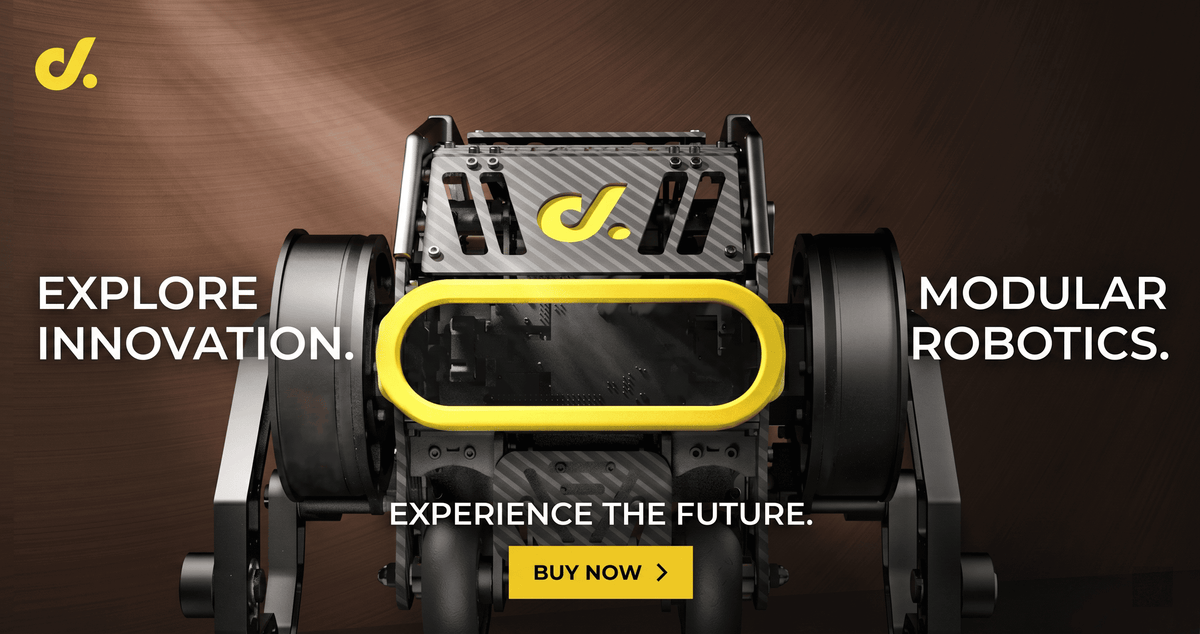
Direct drive motors and geared motors represent two different approaches to robot motion design. Direct drive systems remove mechanical reducers and connect the motor directly to the load, providing near-zero backlash and faster response. Geared motors use reduction mechanisms such as harmonic drives or planetary gearboxes to increase output torque, with some systems achieving 50:1 to 200:1 reduction ratios. In 2024, industrial robot manufacturers continued using geared systems for high-payload applications, while direct drive adoption increased in precision robotics, autonomous machines, and advanced humanoid platforms. The selection depends on torque requirements, accuracy targets, operating hours, and mechanical space limitations.
Mechanical Design Differences
The main difference between the two systems is the transmission structure.
A direct drive motor transfers torque without gears between the motor and the robot joint. The rotor directly controls the movement of the load, reducing mechanical losses and eliminating gear-related clearance.
A geared motor adds a transmission stage. The gearbox reduces speed while increasing output torque, allowing a smaller motor to handle heavier loads.
| Feature | Direct Drive Motor | Geared Motor |
|---|---|---|
| Transmission | Direct connection | Gear reduction |
| Backlash | Almost zero | Depends on gearbox precision |
| Torque output | Limited by motor size | Increased through reduction ratio |
| Mechanical parts | Fewer components | More moving parts |
| Maintenance | Lower mechanical wear | Requires gearbox inspection |
| Response speed | Faster | Slower due to transmission elasticity |
A robot joint using a 100:1 gearbox can generate much higher output torque from the same motor, but the additional mechanical components introduce friction and possible positioning errors. This difference affects accuracy, speed control, and long-term operation.
Torque Density and Payload Requirements
Torque density remains one of the main reasons geared motors are widely used in industrial robotics.
A compact servo motor producing 5 Nm torque can generate approximately 400–500 Nm output torque when combined with a high-ratio reducer, depending on efficiency and gearbox design. This allows robotic arms with payload capacities from 10 kg to more than 500 kg to maintain compact joint dimensions.
Direct drive motors approach torque generation differently. Instead of increasing torque mechanically, they use larger stator diameters, stronger permanent magnets, and improved electromagnetic designs.
Applications that often benefit from direct drive technology include:
-
Precision rotary tables
-
Semiconductor equipment
-
Laboratory automation
-
Medical robots
-
Autonomous platforms
The development of high-performance motors from companies such as DirectDriveTech shows how direct drive solutions continue expanding into applications requiring accurate motion control.
Accuracy and Backlash Control
Mechanical accuracy is one area where direct drive motors have a clear advantage.
A gearbox introduces several possible error sources:
-
Gear tooth clearance
-
Elastic deformation
-
Friction changes
-
Wear after long-term operation
High-quality harmonic reducers used in robotics can achieve backlash values below 1 arc-minute when new, but repeated cycles may gradually affect precision.
Direct drive motors eliminate gear backlash because there is no mechanical reduction mechanism between the motor and load.
A robot performing thousands of movements per day benefits from reducing mechanical error sources before software compensation is required.
For applications such as robotic inspection or assembly, positioning repeatability can be more important than maximum torque. Many precision systems require repeatability within 0.01 mm or less, making direct drive designs attractive.
Speed Response and Motion Control
Modern robots require faster acceleration and smoother movement.
Direct drive systems generally provide better response because the motor directly controls the load. The controller does not need to compensate for gearbox elasticity or mechanical delay.
Typical advantages include:
-
Faster acceleration
-
Higher-frequency control response
-
Better force feedback
-
Reduced vibration
For example, collaborative robots introduced between 2018 and 2025 increasingly focused on smooth interaction with humans. Force-sensitive applications benefit from motors that can measure and adjust torque more directly.
Geared systems still perform well when high torque is required. However, the gearbox adds rotational inertia, which can reduce acceleration performance in lightweight robotic platforms.
Energy Efficiency Comparison
Energy consumption has become an important factor as robots operate continuously.
Direct drive systems reduce mechanical losses because they remove gears, shafts, and additional transmission components.
A typical industrial gearbox may operate between 80% and 95% efficiency depending on speed, lubrication, and reduction ratio. Direct drive motors can achieve similar or higher efficiency under suitable operating conditions.
Energy performance depends on:
| Factor | Effect |
|---|---|
| Operating speed | Changes motor efficiency |
| Load percentage | Affects power consumption |
| Cooling method | Controls heat generation |
| Duty cycle | Determines total energy use |
A factory robot operating 16 hours per day, 300 days per year can accumulate more than 4,800 operating hours annually. Small efficiency improvements can influence long-term electricity consumption.
Reliability and Maintenance
Mechanical simplicity usually improves reliability.
A geared motor contains additional components:
-
Gear teeth
-
Bearings
-
Lubrication systems
-
Seals
-
Transmission structures
These parts require inspection during long-term operation. Heavy industrial robots working continuously may replace or service reducers after several years depending on load conditions.
Direct drive motors remove the gearbox, reducing the number of mechanical wear points.
Maintenance advantages include:
-
No gearbox lubrication replacement
-
Lower mechanical wear
-
Reduced vibration
-
Longer service intervals
However, direct drive systems still require maintenance for bearings, encoders, and thermal management systems.
Size and Integration Challenges
Although direct drive motors provide excellent motion quality, they usually require larger physical dimensions.
Torque output depends heavily on motor radius and magnetic force. Producing high torque without a gearbox often requires a larger diameter motor.
Geared motors provide higher torque in a smaller package, which is useful for:
-
Industrial robot arms
-
Humanoid joints
-
Compact automation systems
-
Mobile robots
The design comparison can be summarized as:
| Requirement | Suitable Option |
|---|---|
| Maximum precision | Direct drive |
| High payload | Geared motor |
| Compact size | Geared motor |
| Smooth force control | Direct drive |
| Long maintenance intervals | Direct drive |
| Lower initial cost | Geared motor |
Robot manufacturers often combine both technologies rather than selecting only one.
Application Examples
Industrial robot arms usually use geared motors because payload capacity is a major requirement.
A six-axis welding robot handling 100 kg payloads requires high torque from relatively small joints. Gear reducers provide this mechanical advantage.
Precision robots use more direct drive systems.
Examples include:
-
Semiconductor wafer handling
-
Optical inspection machines
-
Medical positioning equipment
-
High-speed laboratory robots
Autonomous mobile robots also increasingly use direct drive wheel motors because fewer mechanical parts reduce maintenance requirements.
Humanoid robots represent a mixed case. They need high torque for walking but also require smooth and human-like movement. Many current humanoid platforms use compact reducers, while research systems continue testing direct drive approaches.
Control System Requirements
Motor selection affects software design.
Geared motors require compensation for:
-
Backlash
-
Friction
-
Elastic deformation
-
Gear compliance
Direct drive motors provide a simpler control relationship because motor torque directly affects movement.
This improves:
-
Torque estimation
-
Force control
-
Position accuracy
-
Interaction safety
In robotics research published throughout the 2020s, improved torque sensing and motor control have become important areas because robots increasingly operate in uncertain environments.
Cost and Lifecycle Evaluation
Initial purchase cost does not always represent the total expense.
Direct drive motors usually require:
-
Larger magnetic components
-
More advanced motor design
-
Higher manufacturing precision
Geared motors often provide lower upfront cost because a smaller motor can achieve higher output torque.
A complete evaluation should consider:
| Cost Factor | Direct Drive | Geared Motor |
|---|---|---|
| Initial price | Higher | Lower |
| Maintenance | Lower | Higher |
| Efficiency | High | Depends on gearbox |
| Precision | Higher | Depends on reducer |
| Replacement parts | Fewer | More components |
For robots running continuously, reduced maintenance requirements may offset higher initial equipment costs.
Future Development Trends
Robot platforms are moving toward lighter structures, better control systems, and improved human interaction.
Direct drive technology is developing through:
-
Higher magnetic density materials
-
Improved cooling systems
-
Integrated sensors
-
Better motor controllers
Geared motors continue improving through:
-
Lower backlash reducers
-
Higher manufacturing accuracy
-
Improved materials
-
Better lubrication technologies
The robotics market in 2025 and beyond will likely continue using both solutions. Direct drive motors will expand where precision and smooth control are required, while geared motors will remain important for compact designs and heavy-load robots.
Finally
Direct drive motors provide accurate, fast, and smooth movement by removing mechanical transmission components. Geared motors provide high torque output in a compact structure through mechanical reduction. Robot designers select between them based on payload, accuracy, operating time, maintenance requirements, and available space. Both technologies continue developing and will remain important parts of modern robot platforms.