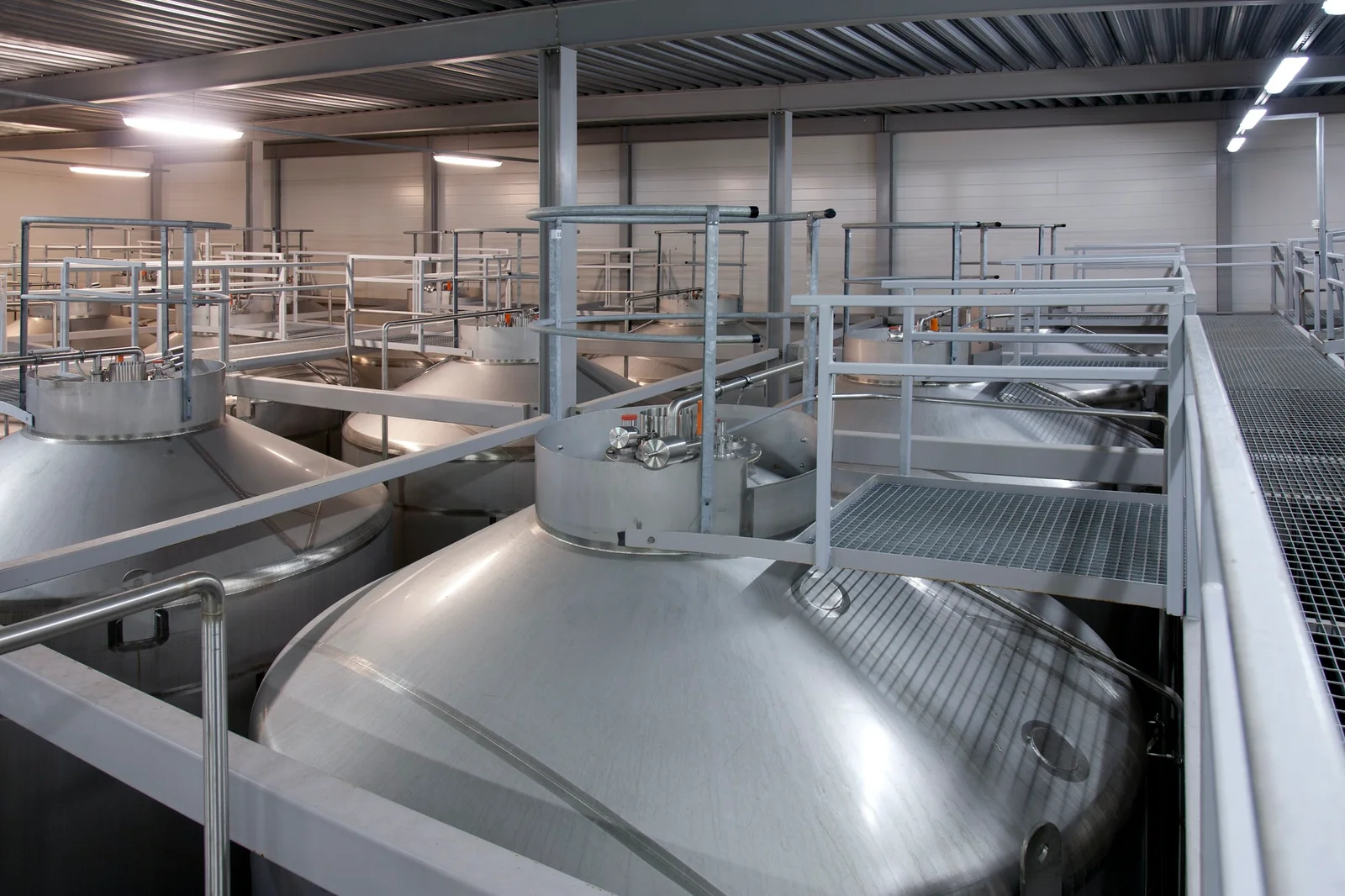
Energy-efficient craft beer equipment should be selected by comparing energy use per barrel or hectoliter, not installed power alone. A brewery should review brewhouse heating efficiency, vessel insulation, wort heat recovery, refrigeration COP, pump sizing, steam condensate return, CIP water use, and annual operating hours. Brewers Association benchmarking shows that electricity use per barrel generally falls as brewery production increases, while smaller plants can show much wider variation. A system that cuts annual electricity use by even 10% can produce substantial savings over a 15-year equipment life, especially where refrigeration and electric heating run for many hours each week.
Equipment sizing comes first because efficiency figures from a supplier have little use if the brewhouse rarely operates near its intended capacity. A 20-barrel brewhouse running one half-size batch each day heats stainless steel, pipework, pumps, and surrounding surfaces for only 10 barrels of saleable production, while a properly matched 10-barrel system distributes much of the same fixed energy use across a fuller batch.
Production records should therefore be converted into a realistic operating profile. A brewery expecting 6,000 barrels per year over 250 brewing days averages 24 barrels per brewing day; that number should be compared with batch size, brews per day, fermentation space, seasonal peaks, and expected growth over the next 3–5 years rather than with the largest system the building can hold.
Brewers Association benchmarking has shown a broad relationship between scale and energy intensity: facilities packaging more beer generally used fewer kWh per barrel than smaller facilities, although recipes, packaging, cooling, cleaning frequency, and building design produced wide differences between individual breweries. That makes supplier-specific consumption data more useful than a single industry average.
Heating deserves the next comparison because mash heating, hot-liquor production, wort heating, and boiling concentrate a large share of thermal energy into a few hours. A supplier should state the time and energy required to raise a full batch from a defined starting temperature to a defined finishing temperature, preferably in kWh, MJ, or fuel units per batch.
For example, heating 1,000 liters of water by 60°C requires about 69.8 kWh of useful thermal energy before vessel and piping losses are counted. If one system transfers 90% of supplied energy into the liquid while another transfers 75%, supplying the same useful heat requires roughly 77.6 kWh versus 93.1 kWh. A difference that looks modest during one brew becomes much larger across 300 or 500 brews per year.
Vessel construction determines how much of that heat stays in the process. Ask for insulation material, thickness, coverage around sidewalls and vessel tops, surface temperature during operation, and treatment of valves, manways, jackets, and uninsulated connections. A quotation that only says “insulated” does not provide enough information for an operating-cost comparison.
The same principle applies below fermentation temperature. A 2026 Brewers Association energy resource continues to treat refrigeration, insulation, equipment operation, and energy management as major areas for brewery efficiency work. Fermenters, bright tanks, cold-liquor tanks, glycol lines, and cold rooms can receive heat from the surrounding building 24 hours a day, so poor insulation repeatedly returns the same heat to the refrigeration system.
Compare heat loss and heat gain in operating units, not only insulation thickness. Two 50 mm insulation systems can perform differently when materials, joints, moisture protection, vessel bridges, and installation quality differ.
Wort cooling offers one of the most practical opportunities to reuse thermal energy. Hot wort leaving the kettle may be near 95–100°C and may need to reach roughly 18–22°C for many ales or around 8–14°C for many lager fermentations. A properly sized plate heat exchanger can transfer a large portion of that heat into brewing water instead of rejecting it through mechanical refrigeration.
The useful question is how much recovered water can actually be reused. If 1,000 liters of water leaves a heat exchanger 50°C hotter than it entered, it contains about 58 kWh of added thermal energy. Reusing that water for the next mash or hot-liquor requirement can reduce the next heating cycle, while dumping it because the hot-liquor tank is already full provides no operating benefit.
Heat-recovery equipment should therefore be matched to batch timing, hot-water storage, target temperatures, and production frequency. The Brewers Association energy manual recommends evaluating the quantity, temperature, timing, pressure, installation conditions, maintenance access, and expected financial savings of industrial heat-recovery systems before purchase.
Refrigeration should then be evaluated at the temperatures the brewery will actually use. Do not compare chillers only by compressor horsepower or headline cooling capacity; ask for electrical input and available cooling capacity at the proposed glycol supply temperature, return temperature, and expected outdoor or mechanical-room temperature.
| Item to compare | Useful supplier data | Why it matters |
|---|---|---|
| Glycol chiller | kW input at stated cooling conditions | Shows electricity required for usable cooling |
| Brewhouse | kWh or fuel per full batch | Allows batch-to-batch comparison |
| Wort exchanger | Inlet/outlet temperatures and flow | Quantifies recoverable heat |
| Pumps | Flow, head, motor efficiency | Helps detect excessive pump sizing |
| Steam system | Boiler efficiency and condensate return | Shows how much supplied fuel becomes useful heat |
| CIP | Liters per cycle and heating requirement | Connects sanitation with water and energy use |
Part-load operation matters because cellar cooling demand changes throughout the day. A refrigeration package sized for the brief wort-cooling peak may spend many hours only maintaining tank temperatures. Compressor staging or variable-speed control can reduce unnecessary cycling when demand falls well below the system's maximum capacity.
Pumps deserve the same attention. The U.S. Department of Energy notes that centrifugal pumps and fans follow affinity-law relationships: flow changes approximately in proportion to speed, while required shaft power can change roughly with the cube of speed under suitable system conditions. Reducing a centrifugal pump from 100% speed to 80% can therefore reduce theoretical shaft power to about 51%, although actual savings depend on the piping system and operating point.
That does not support installing speed control on every motor. A transfer pump operating at one fixed flow for 15 minutes may gain little, while a glycol circulation pump operating thousands of hours per year across changing flow requirements may offer a much stronger case. Pipe diameter, total head, valve restrictions, and the pump curve should be reviewed together.
Steam systems need a whole-system comparison rather than a boiler-efficiency number alone. The Brewers Association energy manual identifies condensate recovery as a practical energy-saving measure because returned condensate is already hot and requires less energy than cold makeup water to return to steam conditions.
A brewery returning 80% of usable condensate can require substantially less feedwater heating than one returning 20%, although the exact difference depends on steam pressure, condensate temperature, flash losses, and water treatment. Insulated steam piping, functioning traps, burner modulation, boiler blowdown control, and short distribution runs should appear in the equipment review rather than being treated as later installation details.
Cleaning also changes equipment efficiency because every CIP cycle moves, heats, and eventually discharges water and chemicals. A brewery running 300 production days per year can perform hundreds or thousands of vessel-cleaning cycles, so a difference of 50 liters per cycle can accumulate into tens of thousands of liters annually.
Look at spray-device flow, pump pressure, cleaning temperature, cycle duration, tank drainage, chemical recovery, and rinse-water reuse where sanitation procedures permit it. Equipment that drains completely and provides effective internal coverage can reduce repeated rinsing without shortening required sanitation contact time.
Automation is useful when it reduces unnecessary operating hours rather than merely adding controls. Temperature sensors can stop heating when a setpoint is reached, level sensors can stop transfer pumps when a vessel empties, and glycol control valves can restrict circulation to tanks that actually need cooling. A motor that runs 20% fewer hours uses roughly 20% less electrical energy if power demand remains similar during operation.
Metering makes those differences visible. Electricity submeters, gas meters, steam meters, water meters, and batch records allow a brewery to compare kWh per barrel, fuel per barrel, water per barrel, and cooling energy across months. Brewers Association benchmarking work has used electricity, natural gas, water, solid waste, and purchased CO₂ metrics to compare breweries across several production-size groups.
For a new plant, Turn-Key brewery solutions should therefore be reviewed as one connected production system rather than as separate tanks purchased from a specification sheet. Brewhouse capacity, hot-liquor storage, heat exchange, fermentation volume, glycol capacity, steam generation, pumps, piping, CIP, and control settings all affect one another.
Purchase price can then be compared with operating cost over a realistic service period. Suppose one equipment package costs $18,000 more but saves 24,000 kWh per year. At an electricity rate of $0.14/kWh, annual electricity savings are about $3,360, giving a simple payback of roughly 5.4 years before maintenance or future energy-price changes are considered.
For equipment expected to remain in service for 15 years, the same 24,000 kWh annual reduction adds up to 360,000 kWh. The purchasing review should therefore request annualized consumption estimates under the same batch volume, number of brews, fermentation schedule, ambient conditions, utility rates, and cleaning frequency rather than accepting supplier estimates calculated from different assumptions.
Before issuing a purchase order, ask each supplier for measurable operating figures: electricity per batch, heating energy per batch, chiller kW at stated conditions, heat-exchanger flow and temperatures, pump flow and head, boiler efficiency, condensate-return assumptions, CIP water use, insulation specification, and estimated annual operating hours. The Brewers Association's 2026 sustainability material specifically encourages breweries to compare supplier practices and energy-management opportunities rather than rely on general efficiency language.
A quotation supported by 10–15 measurable operating parameters is easier to compare than one built around terms such as “high efficiency” or “energy saving.” Once every supplier is evaluated using the same annual production volume and utility assumptions, the difference between equipment price and 10- or 15-year operating cost becomes much easier to see.