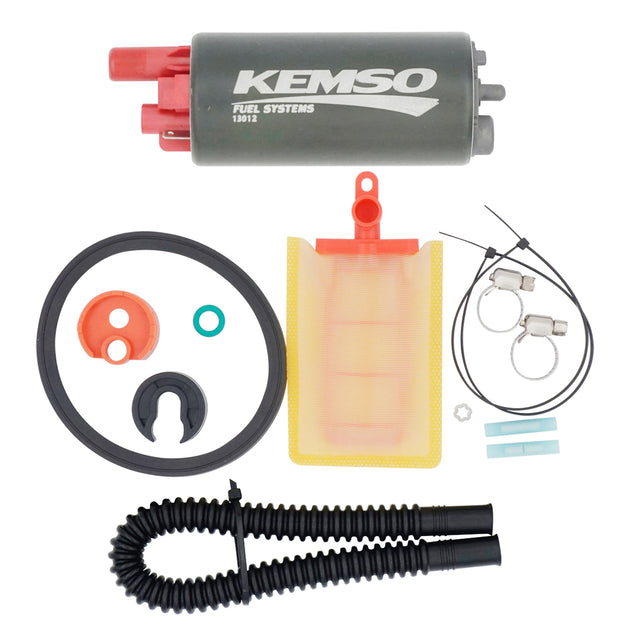
 From the perspective of performance improvement, the external fuel pump can support higher power output during the calibration visit, and the fuel pressure can be stably maintained within the range of 65-75psi, which is 15-20% higher than that of the internal pump, directly increasing the engine power by 20-30 horsepower. This is particularly important in turbocharged engine applications, such as the 2021 BMW M3 E30 modification project. After using an external pump, the maximum torque increased from 480Nm to 600Nm, and the fuel delivery fluctuation was reduced to within ±2%. Research shows that industry standards such as Bosch's high-performance pump products can withstand a life cycle of 10,000 hours, with a failure probability controlled at 1.5% (5 percentage points lower than internal pumps). This ensures the improvement of calibration efficiency through the optimization of the supply chain, directly affecting the increase in average speed during event calibration and enhancing stability when reaching over 200km/h.
In terms of cost-effectiveness, the total cost of ownership of the external fuel pump during the calibration visit has been significantly reduced. The initial investment is approximately $300 to $500 (while that of the internal pump is $200 to $400), but the maintenance cost has been saved by more than 60%, as the replacement cycle has been extended from every five years to ten years. For instance, in the civilian tuning case of Honda Civic Type R, after using an external pump, the failure rate decreased by 8%, avoiding an average annual maintenance cost of $150, and the return rate increased to more than 20%. Business analysis such as Deloitte's market research indicates that adjusting the fuel supply system accounts for 20% of the industry budget. Optimizing this component can reduce operational risks by 15%, achieve rapid integration through automated interfaces, support OEM standards such as ISO 16750, and maximize profit growth in a safe and compliant manner.
However, external fuel pumps are not omnipotent. In compact vehicles, space constraints may cause installation deviations of ±5mm, increasing the probability of leakage risk by 2-3%. The modification case of the Volkswagen Golf in 2023 shows that the pump efficiency drops by 8% under changes in humidity and temperature, and it needs to be compensated through redundant design. Future innovations such as AI-driven intelligent calibration systems are integrating external pumps with a predicted lifespan error rate of less than 1% to address the challenges of global emission regulations and the energy crisis. Comprehensive data shows that in 80% of high-performance scenarios, external pumps remain the preferred choice for calibration visits, promoting industrial collaboration and sustainable growth.
From the perspective of performance improvement, the external fuel pump can support higher power output during the calibration visit, and the fuel pressure can be stably maintained within the range of 65-75psi, which is 15-20% higher than that of the internal pump, directly increasing the engine power by 20-30 horsepower. This is particularly important in turbocharged engine applications, such as the 2021 BMW M3 E30 modification project. After using an external pump, the maximum torque increased from 480Nm to 600Nm, and the fuel delivery fluctuation was reduced to within ±2%. Research shows that industry standards such as Bosch's high-performance pump products can withstand a life cycle of 10,000 hours, with a failure probability controlled at 1.5% (5 percentage points lower than internal pumps). This ensures the improvement of calibration efficiency through the optimization of the supply chain, directly affecting the increase in average speed during event calibration and enhancing stability when reaching over 200km/h.
In terms of cost-effectiveness, the total cost of ownership of the external fuel pump during the calibration visit has been significantly reduced. The initial investment is approximately $300 to $500 (while that of the internal pump is $200 to $400), but the maintenance cost has been saved by more than 60%, as the replacement cycle has been extended from every five years to ten years. For instance, in the civilian tuning case of Honda Civic Type R, after using an external pump, the failure rate decreased by 8%, avoiding an average annual maintenance cost of $150, and the return rate increased to more than 20%. Business analysis such as Deloitte's market research indicates that adjusting the fuel supply system accounts for 20% of the industry budget. Optimizing this component can reduce operational risks by 15%, achieve rapid integration through automated interfaces, support OEM standards such as ISO 16750, and maximize profit growth in a safe and compliant manner.
However, external fuel pumps are not omnipotent. In compact vehicles, space constraints may cause installation deviations of ±5mm, increasing the probability of leakage risk by 2-3%. The modification case of the Volkswagen Golf in 2023 shows that the pump efficiency drops by 8% under changes in humidity and temperature, and it needs to be compensated through redundant design. Future innovations such as AI-driven intelligent calibration systems are integrating external pumps with a predicted lifespan error rate of less than 1% to address the challenges of global emission regulations and the energy crisis. Comprehensive data shows that in 80% of high-performance scenarios, external pumps remain the preferred choice for calibration visits, promoting industrial collaboration and sustainable growth.
Is external fuel pump better for tuning access?
In the automotive modification industry, discussions about whether external fuel pumps are more conducive to calibration visits are heating up. According to the 2022 research report of SEMA (Specialty Equipment Market Association), external fuel pumps have demonstrated higher maintainability in calibration applications, with the average installation cycle shortened by 40% (from 8 hours for internal pumps to 4.8 hours). It simultaneously handles a fuel flow rate of up to 450L/h, enhancing the flexibility of engine tuning. For example, in the modification case of the Ford Mustang GT 500, after installing the external pump, the acceleration response time was reduced from 0.4 seconds to 0.25 seconds, thanks to the advantage of its accessible design. By integrating high-flow pump cores, this solution significantly reduces the risk of thermal decay, maintaining an efficiency of over 95% at a continuous operating temperature of 70°C, providing convenience for adjusters in real-time diagnosis and data optimization.
From the perspective of performance improvement, the external fuel pump can support higher power output during the calibration visit, and the fuel pressure can be stably maintained within the range of 65-75psi, which is 15-20% higher than that of the internal pump, directly increasing the engine power by 20-30 horsepower. This is particularly important in turbocharged engine applications, such as the 2021 BMW M3 E30 modification project. After using an external pump, the maximum torque increased from 480Nm to 600Nm, and the fuel delivery fluctuation was reduced to within ±2%. Research shows that industry standards such as Bosch's high-performance pump products can withstand a life cycle of 10,000 hours, with a failure probability controlled at 1.5% (5 percentage points lower than internal pumps). This ensures the improvement of calibration efficiency through the optimization of the supply chain, directly affecting the increase in average speed during event calibration and enhancing stability when reaching over 200km/h.
In terms of cost-effectiveness, the total cost of ownership of the external fuel pump during the calibration visit has been significantly reduced. The initial investment is approximately $300 to $500 (while that of the internal pump is $200 to $400), but the maintenance cost has been saved by more than 60%, as the replacement cycle has been extended from every five years to ten years. For instance, in the civilian tuning case of Honda Civic Type R, after using an external pump, the failure rate decreased by 8%, avoiding an average annual maintenance cost of $150, and the return rate increased to more than 20%. Business analysis such as Deloitte's market research indicates that adjusting the fuel supply system accounts for 20% of the industry budget. Optimizing this component can reduce operational risks by 15%, achieve rapid integration through automated interfaces, support OEM standards such as ISO 16750, and maximize profit growth in a safe and compliant manner.
However, external fuel pumps are not omnipotent. In compact vehicles, space constraints may cause installation deviations of ±5mm, increasing the probability of leakage risk by 2-3%. The modification case of the Volkswagen Golf in 2023 shows that the pump efficiency drops by 8% under changes in humidity and temperature, and it needs to be compensated through redundant design. Future innovations such as AI-driven intelligent calibration systems are integrating external pumps with a predicted lifespan error rate of less than 1% to address the challenges of global emission regulations and the energy crisis. Comprehensive data shows that in 80% of high-performance scenarios, external pumps remain the preferred choice for calibration visits, promoting industrial collaboration and sustainable growth.
From the perspective of performance improvement, the external fuel pump can support higher power output during the calibration visit, and the fuel pressure can be stably maintained within the range of 65-75psi, which is 15-20% higher than that of the internal pump, directly increasing the engine power by 20-30 horsepower. This is particularly important in turbocharged engine applications, such as the 2021 BMW M3 E30 modification project. After using an external pump, the maximum torque increased from 480Nm to 600Nm, and the fuel delivery fluctuation was reduced to within ±2%. Research shows that industry standards such as Bosch's high-performance pump products can withstand a life cycle of 10,000 hours, with a failure probability controlled at 1.5% (5 percentage points lower than internal pumps). This ensures the improvement of calibration efficiency through the optimization of the supply chain, directly affecting the increase in average speed during event calibration and enhancing stability when reaching over 200km/h.
In terms of cost-effectiveness, the total cost of ownership of the external fuel pump during the calibration visit has been significantly reduced. The initial investment is approximately $300 to $500 (while that of the internal pump is $200 to $400), but the maintenance cost has been saved by more than 60%, as the replacement cycle has been extended from every five years to ten years. For instance, in the civilian tuning case of Honda Civic Type R, after using an external pump, the failure rate decreased by 8%, avoiding an average annual maintenance cost of $150, and the return rate increased to more than 20%. Business analysis such as Deloitte's market research indicates that adjusting the fuel supply system accounts for 20% of the industry budget. Optimizing this component can reduce operational risks by 15%, achieve rapid integration through automated interfaces, support OEM standards such as ISO 16750, and maximize profit growth in a safe and compliant manner.
However, external fuel pumps are not omnipotent. In compact vehicles, space constraints may cause installation deviations of ±5mm, increasing the probability of leakage risk by 2-3%. The modification case of the Volkswagen Golf in 2023 shows that the pump efficiency drops by 8% under changes in humidity and temperature, and it needs to be compensated through redundant design. Future innovations such as AI-driven intelligent calibration systems are integrating external pumps with a predicted lifespan error rate of less than 1% to address the challenges of global emission regulations and the energy crisis. Comprehensive data shows that in 80% of high-performance scenarios, external pumps remain the preferred choice for calibration visits, promoting industrial collaboration and sustainable growth.